THORPENESS AND ALDRINGHAM HERITAGE GROUP
  • Home
  • About
  • Heritage Trail
  • The Meare Board 1
  • The Golf Club Board 2
  • The Windmill and The House in the Clouds Board 3
  • The Haven and The Whinlands Board 4
  • The Dolphin & Shops Board 5
  • The Country Club Board 6
  • The Beach and The Benthills Board 7
  • History of the Village 1906
  • Buildings
  • The Almshouses
  • Thorpeness Halt
  • Interviews
  • Views
  • Ship Wreck
  • Articles
  • Aims
  • Membership
  • Contact

ARTICLES 

The Uplands by Janey Blancheflower

3/16/2017

2 Comments

 
​Unprepossessing Structures or Officers' Quarters?
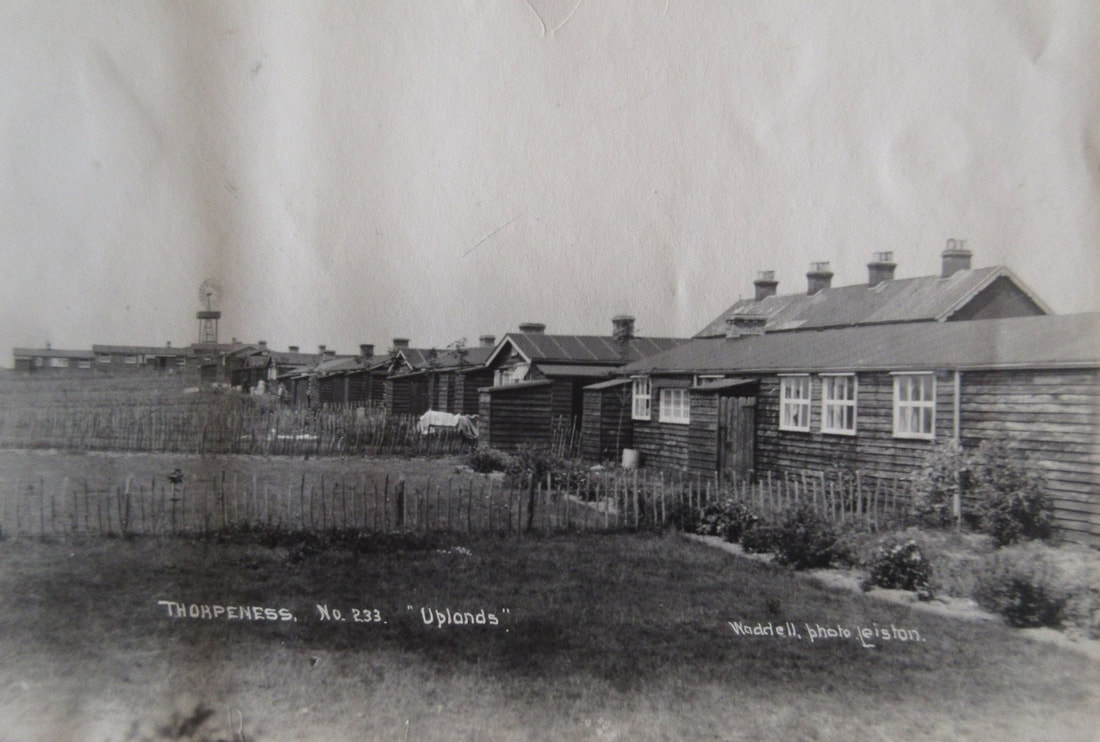
These 16 single-storey, black weather-boarded properties are often the subject of speculation by visitors.  From the privacy of my garden hedge, I have heard various suppositions: railway carriages? Fishermans’' huts? post-war pre-fabs?
Well, this is Thorpeness and they were actually former officer's quarters from the First World War aerodrome at Hazlewood.   Money was tight after the war and G Stuart Ogilvie had the ingenious idea of re-cycling the timber huts to provide accommodation for visitors and estate workers.  George Cook, who was the Company Secretary, recorded details of all the properties in the village including The Uplands, in a large ledger, complete with photographs.
Picture
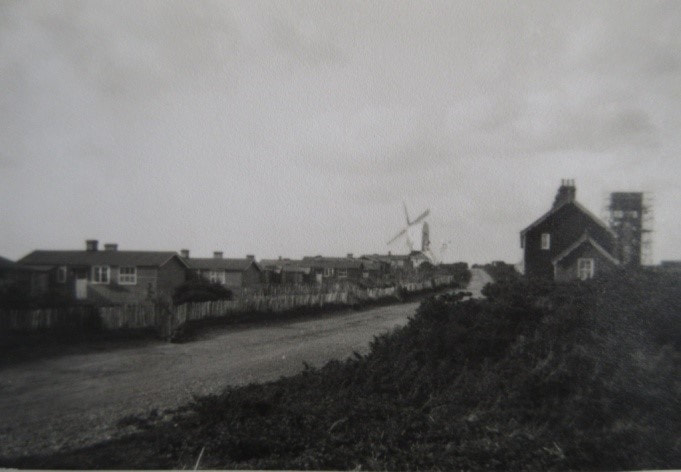
The Uplands c.1924, looking West towards the windmill, Barrack Row & The House in the Clouds (under construction) on right
Picture
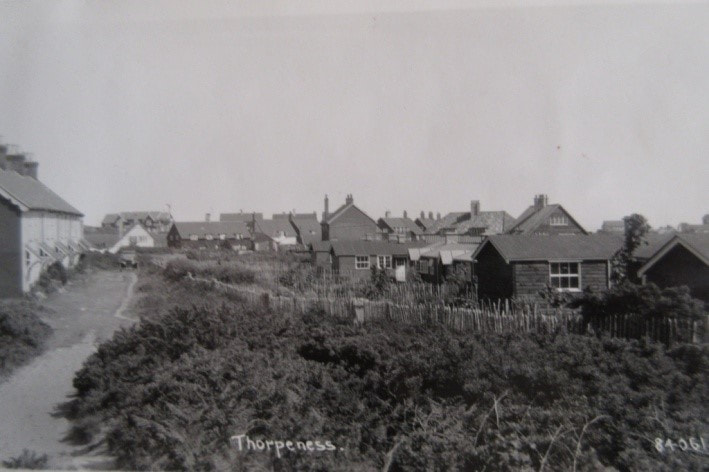
The Uplands, looking East towards the Country Club, Barrack Row on left, 1923-4
The Uplands were built on Thorpeness Common in 1919-20 and the architect is unknown but was probably H G Kemp advised by G S Ogilvie.  The properties varied in size to sleep 3, 5 or 8 persons and internally all walls were of soft or concrete blocks and the roofs of ruberoid.  The timber components were carted from Hazlewood by steam tractor or horse and cart by employees W Vincent, T Easter and R Wolf.  According to size, costs were: Nos. 1, 2, 12 & 12A at a total of £2,200; Nos. 3, 5, 9, 11, 14, 15 & 16 at a total of £2,318; Nos. 4, 6, 7, 8 & 10 at a total of £2,185.
In November 1940, a string of 28 bombs fell across Thorpeness, commencing in the channel to the Caribbean Sea and falling on 6 Lakeside, No. 5 The Uplands, across the cricket field into the area north of the sports field.  No. 5 The Uplands was flattened but fortunately no one was injured.  It was completely rebuilt by W C Reade of Aldeburgh under architect J Adams in 1951 to a higher standard than the original. 
Although the Thorpeness Conservation Area Appraisal (2010) describes The Uplands as 'comparatively basic and unprepossessing structures' they are acknowledged as 'an ​important feature, not only from an historical point of view, (appearing as a fore-runner of the sort of accommodation provided at the mass market holiday camps built years later) but they also contribute to the essential character and appearance of the Conservation Area
Picture
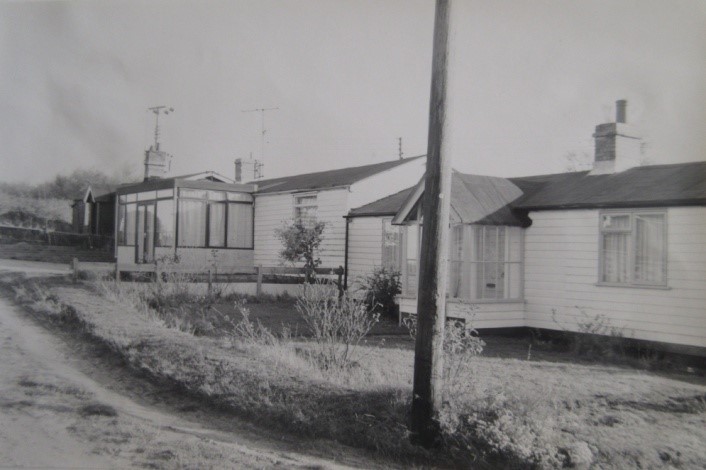
Nos. 16 (right) & 15 The Uplands c.1980
Picture
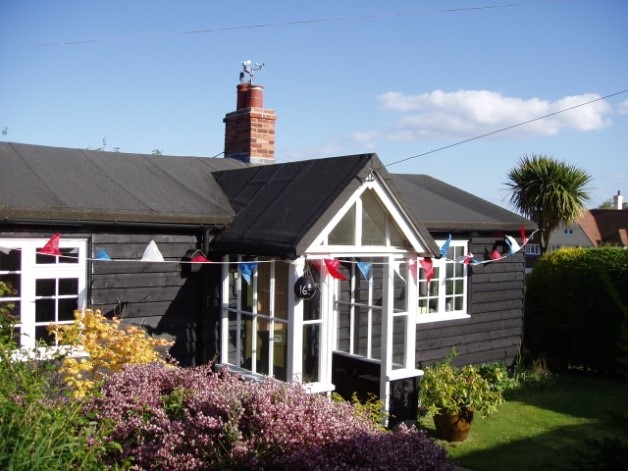
No. 16 The Uplands, 2015
Picture
Rear elevation of The Uplands c.1921 looking West towards windpump (on site of windmill). Roof of Barrack Row, now demolished, visible (right)
(Historic photographs by kind permission of Mrs H Chandler from the George Cook collection).
​
2 Comments
Tony Alexander
7/13/2020 10:20:31 pm

Very interested read , my great grandfather was Almond Alexander.
Coxswain of the lifeboat .

Reply
hughesantonio link
1/29/2021 05:21:38 am

<a href="https://www.premiumdissertation.co.uk/">best essay writing service review</a>

Reply


Leave a Reply.

Proudly powered by Weebly
  • Home
  • About
  • Heritage Trail
  • The Meare Board 1
  • The Golf Club Board 2
  • The Windmill and The House in the Clouds Board 3
  • The Haven and The Whinlands Board 4
  • The Dolphin & Shops Board 5
  • The Country Club Board 6
  • The Beach and The Benthills Board 7
  • History of the Village 1906
  • Buildings
  • The Almshouses
  • Thorpeness Halt
  • Interviews
  • Views
  • Ship Wreck
  • Articles
  • Aims
  • Membership
  • Contact